I have been arranging (and rearranging) bedrooms with feng shui in mind for over a decade, and if there is one piece of furniture I wish people would take more seriously, it is the headboard. Not the mattress. Not the comforter. The headboard. It is the single thing your crown rests against for roughly a third of your life, and in classical feng shui it is treated almost like a silent guardian — the mountain behind you while you sleep.
When I first moved into my own apartment, I slept on a bed with no headboard because I thought it looked “minimalist.” Within three months I was waking up at 4 a.m., unable to settle back down, vaguely anxious for no reason. The first thing my feng shui mentor asked me was, “What is behind your head at night?” The answer — a cold, bare wall with a window half above it — explained a lot.
Once I added a solid, upholstered headboard and shifted the bed, my sleep changed within a week. That is the kind of quiet shift a good headboard can unlock, and it is exactly what I want to walk you through today.
Why the Headboard Matters in Feng Shui
In feng shui, the bedroom is the command center for rest, romance, and personal chi. Your bed is the most important piece of furniture in your entire home, and the headboard gives that bed its “backing” — what classical practitioners call the Black Tortoise position.
The tortoise represents support, stability, and long-term security. Without that backing, chi (life force energy) can’t gather and nourish you as you sleep. You end up feeling exposed, even if you can’t explain why.
A headboard is not decorative. It is energetic armor.
The Best Headboard Materials (and What to Avoid)
The material of your headboard sets the tone for the kind of energy that pools around your head at night. Here is how I think about each one:
| Material | Energy Quality | Best For | Watch Out For |
|---|---|---|---|
| Solid Wood | Grounding, nourishing, steady Wood element | Couples, light sleepers, anxiety | Avoid particleboard; splinters and chemical off-gassing disrupt rest |
| Upholstered (linen, cotton, velvet) | Soft, yin, cocooning | Singles seeking romance, restless sleepers | Keep fabric clean; dusty fabric holds stagnant chi |
| Rattan or Cane | Airy, breathable, Wood-Metal bridge | Warm climates, creative types | Too open-weave can feel like “no backing” |
| Metal | Clear, sharp, Metal element | Very hot rooms or Wood-heavy bagua corners | Avoid wrought iron with bars — jail-cell effect |
| Leather | Assertive, yang | Career-driven singles | Can feel too activating for deep sleep |
My personal rule of thumb: if you struggle to fall asleep, go upholstered. If you fall asleep fine but wake up tired, go solid wood. If you are craving a fresh start or clarity, rattan is a beautiful in-between.
Headboard Colors by Goal
Pinterest loves a color palette, and feng shui gives you a real reason to choose one. Here is a quick cheat sheet based on what you are trying to invite into your life:
| Goal | Best Colors | Element | Why It Works |
|---|---|---|---|
| Deep Sleep | Navy, charcoal, soft black | Water | Calms the nervous system, pulls energy inward |
| Romance | Dusty rose, blush, terracotta | Fire/Earth | Warms the bed, supports partnership chi |
| Stability | Walnut brown, oatmeal, camel | Earth | Anchors a wobbly life or racing mind |
| Clarity | Cream, white, soft gray | Metal | Clears mental clutter, perfect post-breakup |
| Growth | Sage, olive, muted teal | Wood | Supports new chapters, new careers, family |
Avoid very bright reds directly behind your head. Red is a beautiful accent in a feng shui bedroom, but a full red headboard is like trying to sleep with the stove on. A red throw at the foot of the bed is a much better placement for that fire energy.
Shape Matters More Than People Think
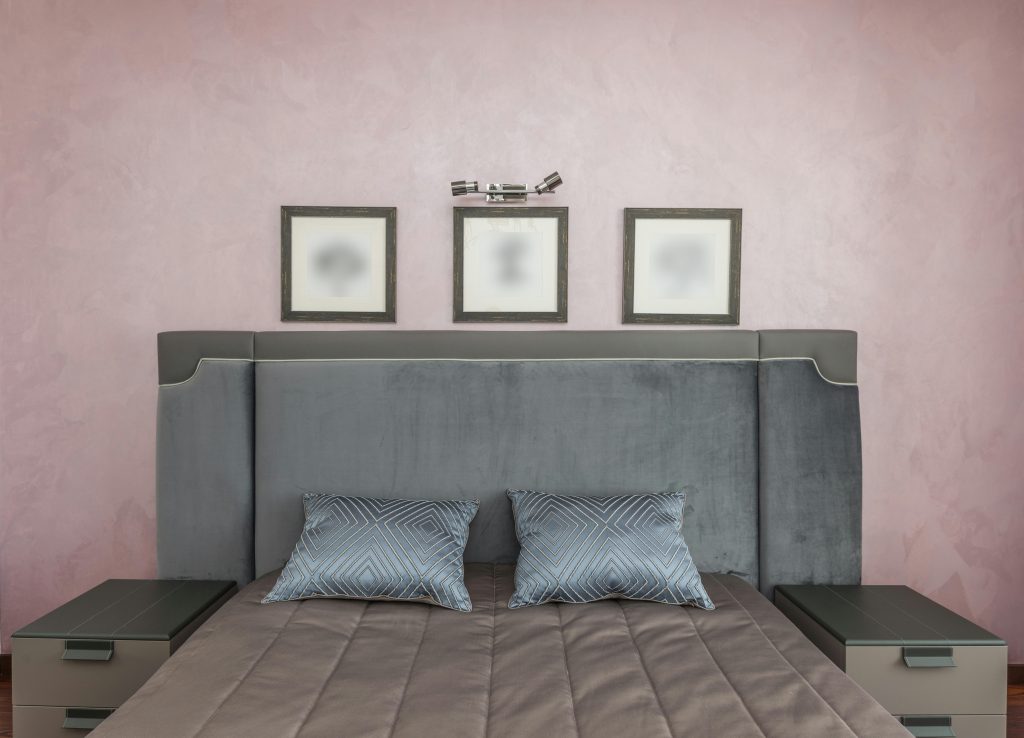
In my consultations, shape is the quietest upgrade I recommend. A rounded or arched headboard softens chi and supports smoother sleep. A flat, rectangular headboard is neutral and works in almost any room. What I gently steer clients away from are sharp, pointed, or “wing” shaped headboards with severe angles — in classical feng shui these are called “poison arrows” and they send cutting energy toward your head every night.
If you already own a sharp-angled headboard, do not panic. Soften it with a folded throw draped over the top, or an upholstered slipcover. The energetic reading changes immediately.
Height matters too. Your headboard should ideally be taller than your head when you sit up in bed. Short, low headboards give you partial backing, which is better than none but not ideal. Think “mountain behind me,” not “speed bump.”
The Placement Rules I Live By
This is where most people go wrong, even with a gorgeous headboard. Material and color don’t matter if placement is off.
Place the headboard against a solid, unbroken wall. No window behind your head. No door on the same wall as your head. Chi that moves past your crown all night leaves you drained. If your only option is a wall with a window, hang heavy curtains and add a tall, solid headboard to compensate.
Keep the headboard flush to the wall. A gap — even a couple of inches — creates a small energetic leak. Use bed risers or a wall-mounted headboard if needed to close that gap.
Never place the headboard against a wall that shares plumbing with a bathroom if you can avoid it. Running water behind your head creates restless, “washed out” sleep. If you can’t move the bed, a thick padded headboard and a small shelf of crystals or books on that wall softens the effect.
Finally, avoid placing the bed so your feet point directly at the bedroom door. This is called the “coffin position” in classical feng shui. The headboard should be on the wall opposite or diagonal to the door, giving you a clear view of the entry without being in line with it. This is the commanding position, and it is non-negotiable in my own bedroom.
Small Upgrades That Make a Big Difference
Once the headboard itself is right, these small touches amplify everything:
A pair of matching nightstands on either side of the bed creates balance and supports partnership energy, even if you are single. Unequal nightstands (one tall, one tiny, or one missing) tell your subconscious that the relationship dynamic is off.
Two lamps, one on each side, echo that same balance. Soft, warm bulbs only. Cool white LEDs right by your head are a common sleep killer I see in almost every consult.
Keep the area behind the headboard clean. No old wires, no stored boxes, no forgotten laundry. The energy there seeps through the wall into your sleep.
Quick Troubleshooting Table
If you have one of these common issues, here is what I would change first:
| Problem | Likely Headboard Issue | First Fix |
|---|---|---|
| Light sleep, wake at 3 a.m. | Open-slat or missing headboard | Swap to solid upholstered |
| Relationship feels distant | Single-person headboard (tiny, twin) | Upgrade to queen+ with soft shape |
| Constant low energy | Metal bars or sharp angles | Drape with cotton throw |
| Can’t fall asleep | Red, black-lacquer, or high-shine | Neutralize with linen slipcover |
| Anxiety, racing thoughts | Headboard against shared bathroom wall | Add thick padding + move plants to wall |
A feng shui headboard is not about spending thousands or buying something trendy. It is about choosing a shape, color, and material that feels like a steady hand at your back. When I walk into a bedroom and the headboard is right, I can feel it — the room breathes slower, and so does the person sleeping in it.
If you take one thing away from this guide, let it be this: pick something solid, place it against a solid wall, and keep the space around your head as clean and intentional as the rest of your life deserves to be. Good sleep is the foundation of good everything, and your headboard is the quiet foundation of good sleep.
Sweet dreams, friend. Your bed is waiting to support you — make sure its back has yours.